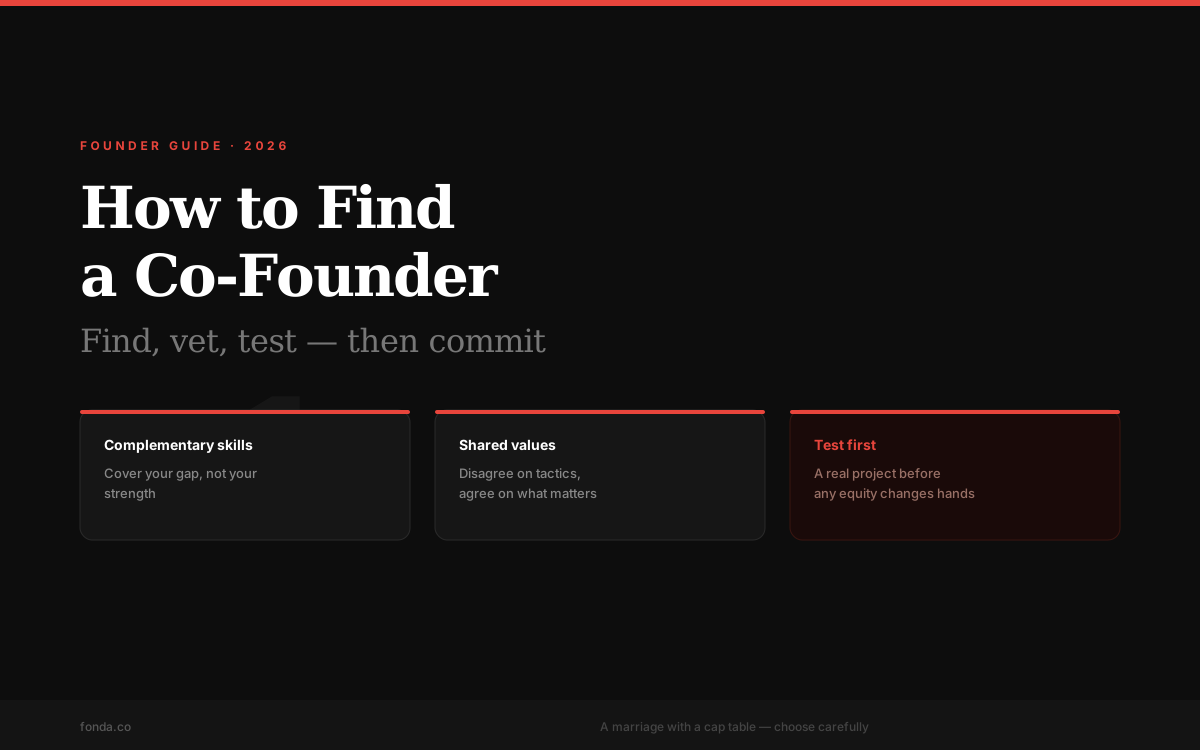
How to Find a Co-Founder
The wrong co-founder can sink a startup faster than a bad idea. The right one doubles everything. Here's how to find, vet, and test one before you tie your future to theirs.
The short version
Look where builders actually work (your network, founder communities, hackathons), vet for complementary skills + shared values + a habit of finishing, and — non-negotiable — test a real project together before you commit. Then split equity roughly equally, on a vesting schedule.
Choosing a co-founder is the highest-stakes hire you'll ever make — except it's not a hire, it's a marriage with a cap table. Co-founder conflict is one of the most common reasons early startups fall apart. So the goal isn't to find someone fast; it's to find someone right, and to find out they're right before it's expensive to be wrong.
First, a gut check: do you even need one? A good co-founder fills a real gap. A bad one is worse than being solo. If you're just looking for company on a lonely journey, that's a reason to join a community — not to give away half your company.
Where to actually look
Skip the generic "networking events." The best pools are places where you can watch someone build, not just pitch:
Your existing network first
Ex-colleagues and people you've shipped with are the highest-signal pool — you already know how they work under pressure.
Founder communities & matching networks
Purpose-built co-founder matching (like Fonda's Founder Network) and communities where builders hang out beat cold networking.
Hackathons & build weekends
Working side-by-side for 48 hours tells you more than 10 coffee chats. Look for how they behave when things break.
Open-source & side projects
People who ship for free, for the love of it, are self-selecting for the trait you want most: initiative.
Your target industry
A co-founder who already lives in the problem's world brings distribution and credibility you can't fake.
How to vet the right one
Once you've found candidates, filter hard. You're looking for four things:
1. Complementary skills, not a clone
The classic pairing is builder + seller. If you both do the same thing, you've doubled a strength and left a hole. Map what the business needs and find the person who covers your gap.
2. Shared values, different strengths
You want to disagree about tactics but agree about what matters — how you treat people, how you handle risk, what 'done' means. Values misalignment is the crack that widens under stress.
3. Evidence they finish things
Ideas are cheap; finishers are rare. Look for a track record of shipped projects, not just impressive talk. Ask 'what's the last thing you actually launched?'
4. How they handle conflict
You will disagree. Watch how they argue in a low-stakes situation before you're bound together. Someone who can't lose gracefully now won't magically improve later.
The rule that saves marriages: test first
Never go all-in on a vibe. Before any equity changes hands, run a real project together for two to six weeks — a validation sprint, a small build, a paid gig. You're testing the un-fakeable stuff: do they do what they say, how do they communicate when stressed, can they disagree without it turning personal? A trial period is the cheapest insurance you'll ever buy against a co-founder breakup.
Splitting equity without regret
When it works, split fairly and protect the future. For two people joining together at equal risk, default to roughly 50/50 — lopsided early splits breed resentment. Adjust for real differences (idea, capital, full-time vs. part-time), and put everyone on a vesting schedule (commonly four years, one-year cliff) so an early departure doesn't hand someone a big slice for a few months of work.
Don't wait on a co-founder to start
Here's the trap: using "I need a co-founder first" as a reason not to begin. You don't. Start validating your idea now — a great co-founder is far easier to attract to something with traction than to a pitch. If you want to meet potential partners, join Fonda's Founder Network — and in the meantime, an personal co-founder can carry the structure while you find your human one.
Start now — human co-founder optional
Fonda is your personal co-founder that runs the journey with you from idea to first customers. Build traction now; attract the right human partner later. Start free.
Join the Founder Network →Frequently asked questions
Do I need a co-founder to start a startup?
No — plenty of successful companies are solo-founded, and a bad co-founder is far worse than none. But a good one roughly halves the workload, covers your skill gaps, and gives you someone to share the emotional weight of the hard days. The honest test: do you have a real gap (a skill or a temperament) that a partner would fill, or do you just want company? Add a co-founder for the former, not the latter.
Where is the best place to find a co-founder?
Start with people you've already worked with — ex-colleagues you've shipped alongside are the highest-signal pool because you know how they behave under pressure. Beyond that, purpose-built co-founder matching networks, founder communities, hackathons, and open-source projects all self-select for the trait you want most: people who actually build. Cold networking events are the least efficient. Prioritize places where you can see someone work, not just talk.
How do I know if someone is the right co-founder?
Look for three things: complementary skills (they cover your gap, not duplicate your strength), shared values (you agree on what matters even when you disagree on tactics), and a track record of finishing (they ship). Then test the partnership before you commit — run a small paid or unpaid project together for a few weeks. How they handle a real deadline, a disagreement, and a setback tells you more than any interview.
How should co-founders split equity?
Default to roughly equal for two people who join at the same time and take the same risk — lopsided early splits breed resentment as the underdog's contribution grows. Adjust for meaningful differences: who came up with the idea, who's full-time vs. part-time, who's putting in money. Critically, put everyone's equity on a vesting schedule (commonly four years with a one-year cliff) so that if someone leaves early, they don't walk away with a huge chunk of the company.
Should I test working together before committing?
Always. The single biggest mistake is going all-in with someone based on a good vibe and a shared dream. Run a real project together first — a small build, a validation sprint, a paid gig — for two to six weeks. You're testing for the un-fakeable stuff: reliability, how they communicate when stressed, whether they do what they say. A co-founder breakup is one of the top killers of early startups; a trial period is cheap insurance.