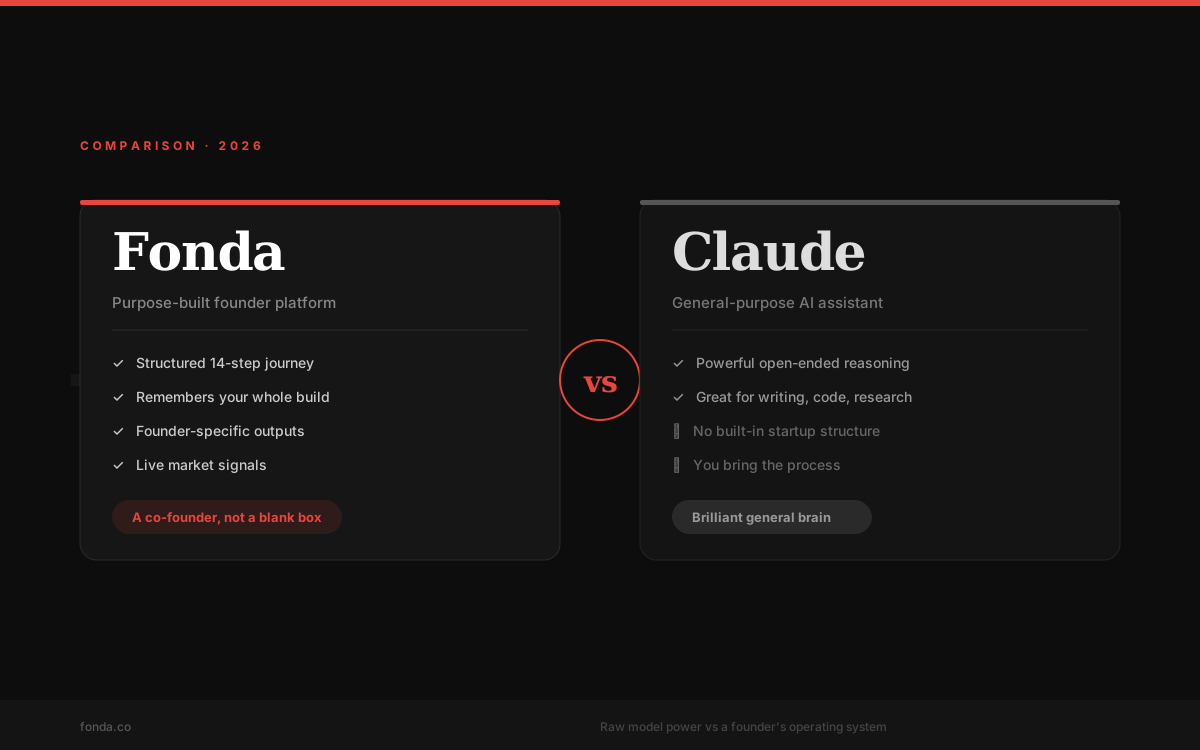
Fonda vs Claude: Can You Build a Startup with a General AI?
Claude is one of the most capable AI assistants in the world. So why would a founder use a purpose-built platform instead? The answer isn't power — it's structure.
The short answer
Claude is a brilliant general-purpose AI — for open-ended thinking, writing, and research, it's hard to beat. Fonda is a purpose-built founder platform that adds what a blank chat can't: a structured journey, persistent memory of your whole build, and founder-specific outputs — layered on top of models like Claude. Use Claude for anything; use Fonda specifically to build a startup.
Let's be clear up front: this is published by Fonda, and Claude is not our rival in the usual sense. Claude, built by Anthropic, is a general-purpose AI assistant — and a genuinely excellent one. Fonda is a narrow, purpose-built platform for founders. Comparing them is less "which is better" and more "which is the right tool for building a company."
The reason this comparison matters is that a lot of founders reasonably ask: if AI is this good now, can't I just build my startup in a chat window? You can get far. But there's a specific gap, and it's worth understanding before you spend three months in it.
The blank-box problem
A general AI assistant gives you enormous power and zero path. It answers whatever you ask — but building a startup isn't one question. It's a sequence: discover an idea, validate demand, size the market, scope an MVP, plan the launch, find customers, prepare to raise. Each step depends on the last, and the order matters.
In a chat, you have to know that sequence, ask the right question at the right time, and carry every earlier decision forward in your own head (or by copy-pasting context). The AI is only as structured as your prompting. Most first-time founders don't yet know what to ask — that's exactly the knowledge they're missing. A brilliant answer to the wrong question doesn't move you forward.
What Fonda adds on top
Fonda doesn't compete with the model — it wraps a founder-shaped process around it. Three things a general chat can't give you by default:
- Structure. A fixed 14-step journey (Discover → Validate → Launch → Scale) that tells you the next action each day, so you never face a blank box.
- Memory. It holds your assumptions, plan, and decisions across the whole build — not just one thread — so nothing gets lost between sessions.
- Purpose-built outputs. A scored validation verdict, a lean canvas, an MVP plan, a pitch deck, and live market signals — as real artifacts, not free text you have to assemble.
For the record: Fonda runs on several large language models plus proprietary venture-building tools — the model is the engine, Fonda is the vehicle built around it. So this isn't "our AI vs their AI." It's "a raw model vs a model with a founder's operating system on top."
Side-by-side
Where a general assistant wins, and where a purpose-built platform does. "Partial" means possible but manual.
| Capability | Fonda | Claude |
|---|---|---|
| Raw reasoning & writing powerClaude is a state-of-the-art general model — for open-ended thinking and writing, it's exceptional. | ◐ | ✓ |
| Structured startup journeyFonda runs a fixed 14-step path; a chat window has no built-in structure. | ✓ | ✕ |
| Remembers your whole buildFonda persists your assumptions, plan, and decisions across the project; a chat's memory is limited to the thread. | ✓ | ◐ |
| Knows what to do nextFonda tells you the next action each day; with Claude, you have to know what to ask. | ✓ | ✕ |
| Founder-specific outputsLean canvas, validation verdict, MVP plan, pitch deck as first-class artifacts vs. free-form text you assemble yourself. | ✓ | ◐ |
| Real market/demand signalsFonda pulls live funding/launch/demand signals matched to your idea. | ✓ | ✕ |
| Free to startBoth have a free entry point. | ✓ | ✓ |
| Best for anything (email, code, research)Claude is general-purpose; Fonda is only for building a startup. | ✕ | ✓ |
✓ = strong · ◐ = possible but manual · ✕ = not its purpose. Reflects each tool's design intent as of August 2026; general AI models improve fast, so capabilities shift.
Who should use which
Reach for Claude when…
- • You want open-ended thinking or writing
- • You're coding, researching, or drafting
- • You already know exactly what to ask
Reach for Fonda when…
- • You specifically want to build a startup
- • You'd rather follow a path than improvise it
- • You want the process to remember your whole build
The honest verdict
If you want the single most capable AI to think alongside you about anything, use Claude — it's outstanding, and Fonda isn't trying to replace it.
But if your actual goal is "turn my idea into a real business," raw model power isn't the bottleneck — knowing the right next step, in the right order, without losing the thread is. That's the job Fonda is built for: a co-founder that runs the process with you and produces the artifacts you need at each stage. Many founders use both — a general model as the brain, Fonda as the structured operating system for the build.
Curious how the guided version feels? Start with a free, blunt roast of your idea, or read how to start a business with AI for the full step-by-step.
A co-founder, not a blank box
Fonda runs the startup-building journey with you — structure, memory, and real deliverables. Start free, no card.
Roast my idea for free →Frequently asked questions
Can I just use Claude to build a startup?
You can get surprisingly far. Claude is a powerful general assistant — it can brainstorm ideas, draft a business plan, critique your thinking, and write your landing-page copy. The catch is that Claude waits for you to know what to ask. Building a startup isn't one prompt; it's dozens of steps in the right order, each building on the last, with context that has to carry across weeks. A blank chat gives you power but no path. Fonda adds the path — a structured journey and founder-specific outputs — on top of models like Claude.
Is Fonda better than Claude?
It's the wrong question — they're different tools. Claude is a better general-purpose AI; it's more powerful and flexible for open-ended work, and we'd never claim otherwise. Fonda is better at one specific job: guiding a founder from idea to first customers with structure, memory, and concrete deliverables. If you want a brilliant thinking partner for anything, use Claude. If you want a co-founder that runs the startup-building process with you, use Fonda.
Does Fonda use Claude?
Fonda runs on several large language models rather than a single one, combined with proprietary tools built specifically for venture building. The point of Fonda isn't the underlying model — it's the structured startup context, guided workflows, and founder-specific outputs layered on top. Think of the model as the engine and Fonda as the whole vehicle built around it.
What can Fonda do that a general AI chat can't?
Three things mainly: (1) structure — a fixed journey that tells you the next step instead of a blank box; (2) memory — it holds your assumptions, plan, and decisions across the entire build, not just one thread; and (3) purpose-built outputs — a scored validation verdict, a lean canvas, an MVP plan, a pitch deck, and live market signals, produced as real artifacts rather than free text you assemble yourself.
So when should I use each?
Use Claude (or another general assistant) for open-ended thinking, writing, coding, and research — it's excellent at those. Use Fonda when you specifically want to build a startup and you'd rather follow a guided path than improvise the process yourself. Plenty of founders use both: Claude as a general brain, Fonda as the structured co-founder that keeps the build moving.