How Much Does It Cost to Start a Startup?
The honest answer for 2026: far less than you think to get started, and far more than you think if you build the wrong thing. Here's the real breakdown — and how to launch for under $1,000.
The short answer
You can get a validated idea, a landing page, and a basic MVP live for under $1,000 — often much less — using no-code and AI tools. The costs that sink founders aren't the obvious ones; they're building before validating. Spend on proof first, product second.
"How much does it cost to start a startup?" is really two questions. One: what are the unavoidable line items? Two: where do founders waste the most money? The second question matters more — because the difference between a $500 launch and a $50,000 hole is almost never the registration fee. It's whether you built something people wanted.
Let's do the real numbers first, then the expensive mistakes to dodge.
The real cost breakdown (first 6 months)
For a typical software or service startup, launched lean. Ranges reflect DIY-with-free-tools on the low end and paying others on the high end.
| Cost | Typical range |
|---|---|
| Business registrationSole proprietor is often free; an LLC runs ~$50–$300 depending on your state/country. Don't incorporate before you have to. | $0–$300 |
| Domain & emailA .com and a professional email address. Skip premium domains early — you can upgrade later. | $15–$50/yr |
| Website / landing pageNo-code and AI builders get you a real page for free to cheap. You do not need a custom-designed site to validate. | $0–$200 |
| Validation & adsA small ad budget to drive targeted traffic to a demand test. This is the highest-ROI money you'll spend early. | $50–$300 |
| Tools & subscriptionsEmail, analytics, a co-founder platform. Start on free tiers; add paid tools only when they clearly pay for themselves. | $0–$100/mo |
| Legal / accounting basicsA terms-of-service template and basic bookkeeping. Skip the expensive lawyer until there's money or a contract on the line. | $0–$400 |
| MVP buildNo-code or AI builders make this near-zero if you DIY. Hiring a freelancer for a simple MVP is where costs can climb — validate first. | $0–$2,000 |
Ranges are directional for a lean software/service startup in 2026 and vary by country, industry, and how much you DIY. Physical-product or regulated businesses cost more.
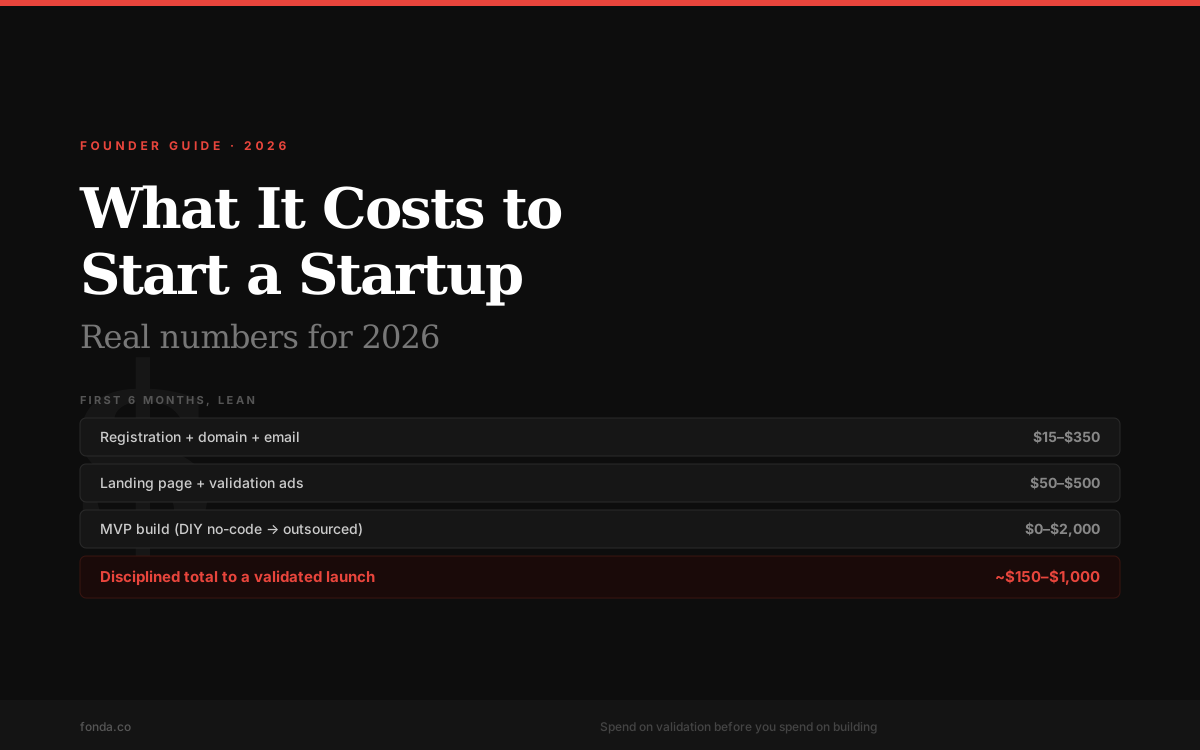
Add it up and a disciplined founder lands somewhere between ~$150 and ~$1,000 to get to a validated idea with a live page and a basic MVP. The wide gap at the bottom (the MVP build) is the one you control most — DIY with no-code and it's near-zero; outsource a full build before validating and it explodes.
Where founders actually waste money
The dangerous costs aren't on the table above. They're the ones you talk yourself into:
- ✕Building the full product first. The single most expensive mistake — thousands spent on an MVP a $50 test would have killed.
- ✕Incorporating too early. Fees, accounting, and admin for a business that hasn't proven itself yet.
- ✕A premium brand and logo. Beautiful, and completely irrelevant until people want the thing.
- ✕Paid tools you don't need yet. Every free tier first; upgrade only when a tool clearly pays for itself.
- ✕Hiring before revenue. The fastest way to burn a runway is salaries against an unproven idea.
The one rule that controls the whole budget
Spend on validation before you spend on building. Money that proves demand — a cheap ad test, a landing page, customer conversations — is worth ten times money spent on a product nobody's confirmed they want. Get that order right and your startup costs stay small; get it wrong and no budget is big enough.
Do the math before you spend
Before you open your wallet, size the opportunity and sanity-check the numbers. Use the free TAM SAM SOM calculator to see if the market's worth it, draft the numbers with the business plan generator, and read how to build an MVP without writing code to keep the biggest line item near zero.
Spend on the right things, in the right order
Fonda validates demand before you build, sizes your market, and scopes a lean MVP — so you never spend big on an idea you haven't proven. Start free.
Pressure-test my idea free →Frequently asked questions
How much money do you need to start a startup?
Less than most people think — often under $1,000 to get a validated idea, a landing page, and a basic MVP live, if you're willing to do the work yourself with no-code and AI tools. The big costs (a full custom build, an office, employees, a lawyer) come later, and many never come at all. The single most important principle: spend on validation before you spend on building. Money spent proving demand is worth ten times money spent on a product nobody's confirmed they want.
Can I start a startup with no money?
For many software and service businesses, essentially yes. You can validate an idea for free (conversations, community posts, a free landing page), build an MVP with free no-code and AI tools, and land your first customers through direct outreach rather than paid ads. 'No money' forces discipline that well-funded founders often lack — you can't hide a weak idea behind a big budget. What you'll spend instead is time and hustle.
What's the biggest startup expense to avoid early?
A full, polished product built before anyone's confirmed they want it. Founders routinely spend thousands (or tens of thousands) building an MVP for an idea that a $50 demand test would have flagged as weak. Other classic early over-spends: incorporating too soon, an expensive brand/logo, premium tools you don't need yet, and hiring before you have revenue. Validate first, then spend against evidence.
How do I budget for a startup?
Work backwards from your runway, not forwards from a wish list. Decide how many months you can fund, then allocate to the few things that actually move you forward: validation, a minimal build, and reaching customers. Model your unit economics early — if a customer doesn't clearly cost less to acquire than they're worth, no budget fixes that. A simple spreadsheet (or a tool that keeps the math transparent) beats a fancy plan.