How to Name Your Startup in 2026: A 6-Step Guide
A great name won't save a bad business — but a bad name can quietly cost you customers, trademarks, and a clean domain. Here's how to get it right in an afternoon.
Quick Answer
To name your startup:
- 1. Decide what the name should signal — clarity, emotion, or ownability
- 2. Pick a naming style (real word, coined, blend, and so on)
- 3. Brainstorm 50+ candidates — or generate 100+ with a free tool
- 4. Run the say-it-out-loud test and shortlist to 5
- 5. Check domain, trademark, and social handles
- 6. Sleep on your top 3, then commit
Naming feels like the fun part, and it is — but it's also where founders waste weeks or lock themselves into a name they regret. The good news: naming is a solvable problem with a repeatable process. You don't need to be clever. You need to be systematic.
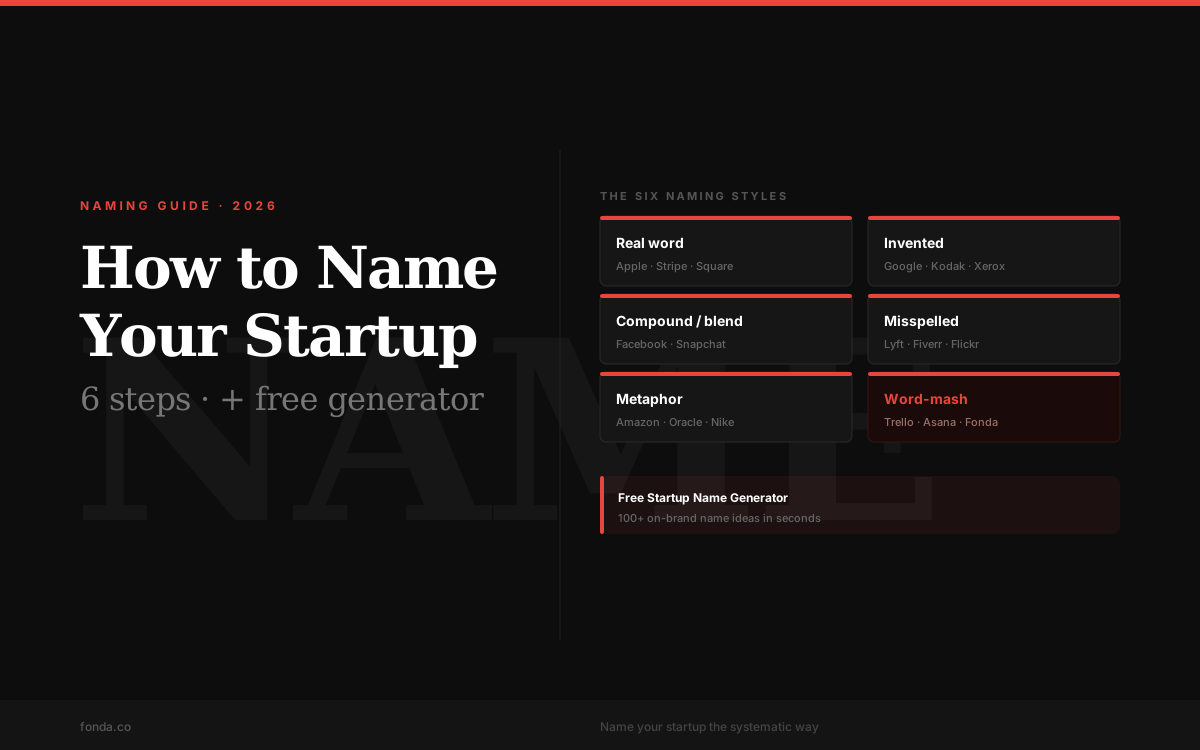
The six naming styles
Almost every startup name falls into one of six styles. Knowing them turns a blank page into a set of directions you can explore on purpose.
Real word
Apple, Amazon, Square, StripeYou want instant memorability and warmth. Easy to say and spell, but hard to trademark and the .com is usually gone.
Invented / coined
Google, Kodak, Xerox, VerizonYou want a name you can fully own and trademark. Takes marketing spend to give it meaning, but the domain is usually free.
Compound / blend
Facebook, Salesforce, Snapchat, YouTubeYou want to signal what you do while staying ownable. Two familiar words fused — clear and still distinctive.
Misspelled real word
Lyft, Fiverr, Tumblr, FlickrYou want a real-word feel with an available domain. Risk: people misspell it when typing or telling a friend.
Metaphor / evocative
Amazon, Oracle, Nike, MesaYou want emotion and story over literal description. A word that suggests a feeling — scale, wisdom, victory.
Founder / place / word-mash
Warby Parker, Trello, Asana, FondaYou want something human, short, and pronounceable that doesn't box you into one product line.
Generate a big list — fast
The single biggest mistake is stopping at five names. Great names hide in volume. Brainstorm at least 50 candidates before you judge any of them, mixing all six styles. If a blank page is slowing you down, this is exactly what AI is good at:
Use the free Startup Name Generator to get 100+ on-brand name ideas in seconds — complete with different styles you might not have considered. Generate broadly, then filter.
Generate startup names free →Six mistakes that kill good names
- ✕Picking a name that describes today's product so literally you can't pivot ("AItextsummarizer.com" ages badly).
- ✕Choosing something no one can spell after hearing it once — the "radio test" fail.
- ✕Ignoring the domain and social handles until after you're attached to the name.
- ✕Skipping the trademark check and getting a cease-and-desist a year in.
- ✕Copying a competitor's naming style so closely you blur together in the market.
- ✕Using a hard-to-pronounce foreign word without checking what it means in other languages.
The pre-launch name checklist
Once you have a shortlist of five, run every candidate through this before you commit. A name that fails any of these can cost you real money later.
Say it out loud
Can someone spell it correctly after hearing it once? If not, cut it.
Check the domain
The .com still matters for trust. A clean .com or a strong alt (.co, .ai) is fine; a hyphenated mess is not.
Search the trademark
Do a free USPTO / EUIPO search for your class. A conflict here can force an expensive rename later.
Grab the handles
Check the name is available (or close) on the socials your audience actually uses.
Google it
Make sure it isn't already a brand, a slang term, or something embarrassing in another language.
Sleep on the top 3
Names that still feel right after 48 hours usually are. Infatuation fades; a good name doesn't.
A name is a starting point, not the business
One last piece of perspective: don't let naming become procrastination. Amazon started as a bookstore; Google was a spelling mistake; Fonda is a short, human word that boxes nobody in. None of them were "perfect" on day one — they became strong because the businesses behind them were. Pick a name that's clear, ownable, and pronounceable, then go do the work.
Once you've got the name, the next step is proving people want what you're building. Read How to Validate a Startup Idea and How to Write a Business Plan.
Get 100+ startup name ideas in seconds
Fonda's free name generator gives you on-brand, distinctive options across every naming style — so you can spend your time filtering, not staring at a blank page.
Try the free name generator →Frequently asked questions
How do I come up with a name for my startup?
Start from what you want the name to signal (clarity, emotion, or ownability), pick one of the six naming styles, then brainstorm 50+ candidates without judging them. Fastest path: use a free startup name generator to produce 100+ options in seconds, shortlist the ones that pass the say-it-out-loud test, then run domain and trademark checks. The generating is easy; the filtering is where the work is.
Does my startup name need a .com domain?
It helps but it's no longer mandatory. A clean .com still signals trust and is worth paying up for if it's affordable. But plenty of strong modern startups run on .co, .ai, .io, or a short brandable alt. What matters more is that the domain is short, matches the name exactly, and isn't hyphenated or full of numbers. Avoid a domain that's a slightly-different spelling of your brand — you'll lose traffic to typos.
Should I check trademarks before naming my startup?
Yes — before you print anything or buy the domain. A free search on the USPTO (US) or EUIPO (EU) database for your industry class takes ten minutes and can save you a forced, expensive rebrand later. A name being available as a domain does not mean it's free of trademark conflicts; they're separate systems. If you're going to raise money or scale, do this early.
What makes a good startup name?
A good startup name is short (ideally one or two syllables to say), easy to spell after hearing it once, distinctive enough to trademark and rank for, and broad enough that it won't box you in when you expand beyond your first product. It should feel right when you say "Hi, we're ___" out loud. Memorability and pronounceability beat cleverness almost every time.
Can I use an AI generator to name my company?
Absolutely — it's the fastest way to get from zero to a big list of candidates. A good AI generator gives you 100+ on-brand options in seconds and often suggests styles you wouldn't have thought of. The catch: the AI can't check trademarks or judge your market, so treat its output as raw material. Generate broadly, then apply the human filters — say-it-out-loud, domain, trademark — to find the winner.