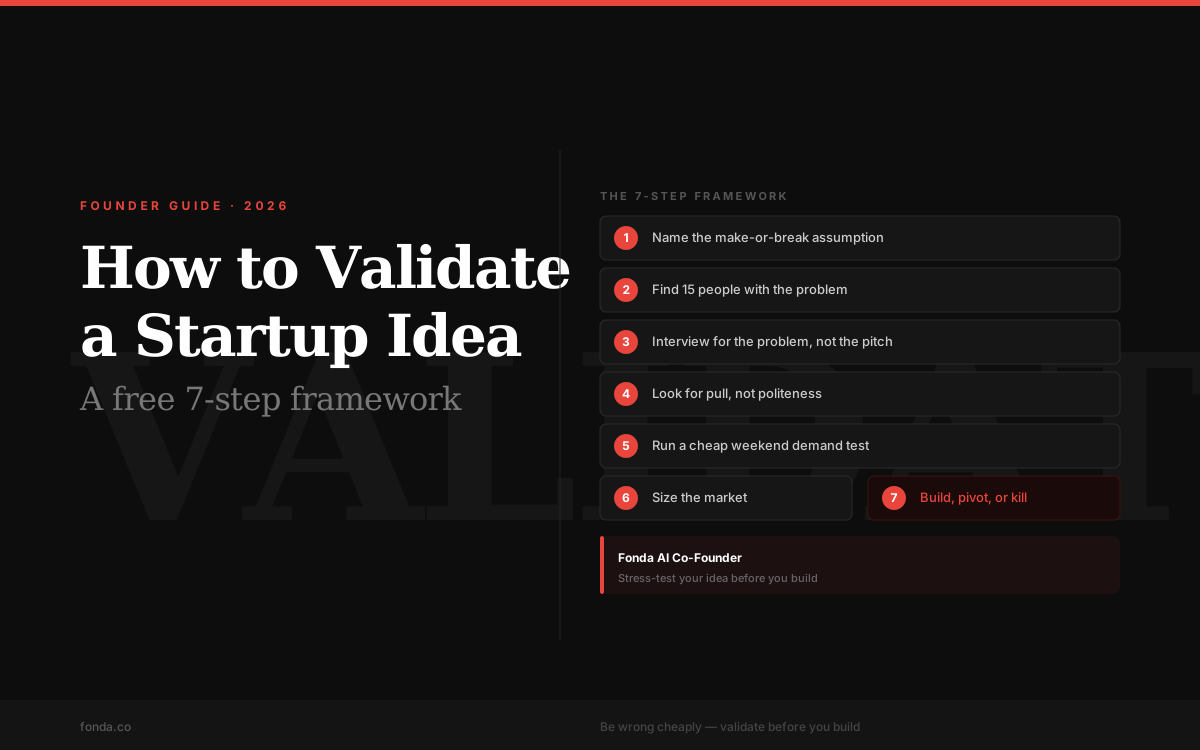
How to Validate a Startup Idea in 2026 (Free 7-Step Framework)
Most startups fail because they build something nobody wanted. Validation is how you find that out in a week instead of a year — for free, before you write a line of code.
Quick Answer
To validate a startup idea, in order:
- 1. Write down the one assumption the whole idea depends on
- 2. Find 15 people who have the problem today
- 3. Interview them about the problem — never pitch your solution
- 4. Look for pull (they'll pay), not politeness ("nice idea")
- 5. Run a cheap landing-page demand test over a weekend
- 6. Size the market so the win is worth it
- 7. Decide: build an MVP, pivot, or kill it
Here's the uncomfortable truth: the number-one reason startups die isn't competition, funding, or bad tech. It's building something people didn't want. Validation is the cheapest insurance you'll ever buy — a week of conversations that can save you a year of building the wrong thing.
Validation is not asking your friends if your idea sounds good. They'll say yes because they like you. Real validation means getting evidence from strangers who have the problem, before you've invested anything you'd hate to lose. Here's the framework, step by step.
The 7-step validation framework
1. Write down the assumption you're actually betting on
Every idea hides one make-or-break assumption. Not "people want productivity" — something falsifiable like "freelance designers will pay $20/month to auto-generate client contracts." If that one sentence is false, the business is dead. Write it down before anything else. This is the thing you're going to test.
2. Find 15 people who have the problem — before you pitch a solution
Validation is not asking friends if your idea is cool (they'll lie to be nice). Find 15 strangers who live the problem today. Reddit threads, niche Slack/Discord groups, LinkedIn, industry forums. You want people currently spending time, money, or emotional energy on the problem — those are the only opinions that predict revenue.
3. Interview for the problem, never for the solution
Ask about their last real experience, not hypotheticals. "Walk me through the last time you dealt with X." "What did you do? How much did it cost you? What did you try that didn't work?" The moment you describe your product, you've contaminated the data — people say yes to be polite. Keep your idea a secret and just listen for pain.
4. Look for pull, not politeness
A validated problem shows pull: people already pay for a bad workaround, ask you to email them when it's ready, or offer to pay before it exists. Politeness ("nice idea, good luck!") is the sound of a dead idea. If nobody leans in, you've saved yourself a year — that's a win, not a failure.
5. Run a cheap demand test in a weekend
Turn interest into a real signal. Put up a one-page landing site describing the product and a "Get early access" button. Drive 100–200 targeted visitors ($50 of ads or 3 relevant community posts). Measure email signups. A 5%+ email conversion from cold, targeted traffic is a strong signal. A pre-order or paid waitlist is even stronger — money talks louder than emails.
6. Size the market so the win is worth it
A validated problem in a tiny market is still a hobby. Do a quick bottom-up TAM/SAM/SOM: how many people have this problem, times what they'd pay. You're not chasing precision — you're checking that if this works, it's big enough to matter. A $2M/year ceiling and a $2B/year ceiling call for very different decisions.
7. Decide: build, pivot, or kill
Lay your evidence on the table. Strong pull + real demand test + big-enough market = build an MVP. Weak signal but a real problem = pivot the solution or the segment and re-test. No pull anywhere = kill it and move on, richer for the lesson. The goal of validation isn't to prove yourself right — it's to be wrong cheaply.
The signals that actually matter
The whole game is learning to tell a real buying signal from a polite one. Here's the cheat sheet — the left column means you might have something; the right column means keep looking.
Do it faster with free tools
You can run this whole framework by hand. But a few free tools remove the busywork so you can spend your time on the part that matters — talking to customers:
- Roast My Idea — paste your idea and get a brutally honest critique of the assumptions most likely to be wrong, so you know exactly what to test first.
- Startup Idea Generator — stuck, or your idea just failed validation? Generate fresh, problem-first ideas to pressure-test next.
- TAM SAM SOM Calculator — size the market in minutes so you know whether the win is worth the work (that's step 6).
Want to go deeper on the pitfalls? Read 10 Startup Idea Validation Mistakes and Why Startup Ideas Fail.
The mindset that makes validation work
Founders who validate well share one trait: they're trying to disprove their idea, not defend it. Every interview is a chance to find out you're wrong while it's still cheap to be wrong. If you find yourself explaining away bad signals or steering interviewees toward yes, stop — that's not validation, that's a sales pitch to yourself.
Do this honestly and one of two good things happens. Either you get real evidence that people want what you're building — and you start with conviction instead of hope — or you learn, in a week, that they don't, and you keep your year and your savings. Both outcomes beat building in the dark.
Validate your idea in minutes, not months
Fonda is your personal co-founder — it stress-tests your assumptions, sizes your market, and tells you what to test first. Start with a free roast of your idea.
Roast my idea for free →Frequently asked questions
How do I validate a startup idea with no money?
You don't need money. Validation is mostly conversations. Find 15 people who have the problem in free communities (Reddit, Slack, Discord, LinkedIn), interview them about their actual experience — not your idea — and look for whether they already pay for a workaround or ask you to build it. A free one-page landing site plus a few targeted community posts can generate a real demand signal for $0. Money only speeds up the traffic test.
How many customer interviews do I need to validate an idea?
Aim for at least 15 problem-focused interviews before you trust the result. By interview 10–12 you'll usually hear the same 2–3 core pains repeating, which means you've hit signal. Fewer than 10 and you're reacting to noise; the loudest single opinion can send you the wrong way. Quality matters more than quantity: 15 people who genuinely have the problem beat 50 random friends.
What's the difference between validating a problem and validating a solution?
Problem validation confirms people actually have the pain and care enough to act — this comes first and is done through interviews and observation. Solution validation confirms your specific product solves it well enough that people will pay — this comes second and is done with a demo, landing page, or MVP. Most failed startups skipped problem validation and jumped straight to building a solution nobody needed.
How do I know when my idea is validated enough to start building?
You have enough to build an MVP when three things line up: (1) clear pull from real customers — pre-orders, paid waitlists, or people asking when it's ready; (2) a demand test that converted cold, targeted traffic above ~5%; and (3) a market big enough to be worth your time. If pull is weak but the problem is real, pivot and re-test instead of building.
Can I validate an idea using AI tools?
AI speeds up the boring parts of validation — pressure-testing your assumption, sizing the market, drafting interview questions, and stress-testing weak points in your plan. It can't replace real customer conversations, which are where the truth lives. Use AI to prepare and to sanity-check your reasoning, then go talk to actual humans about their actual problem.