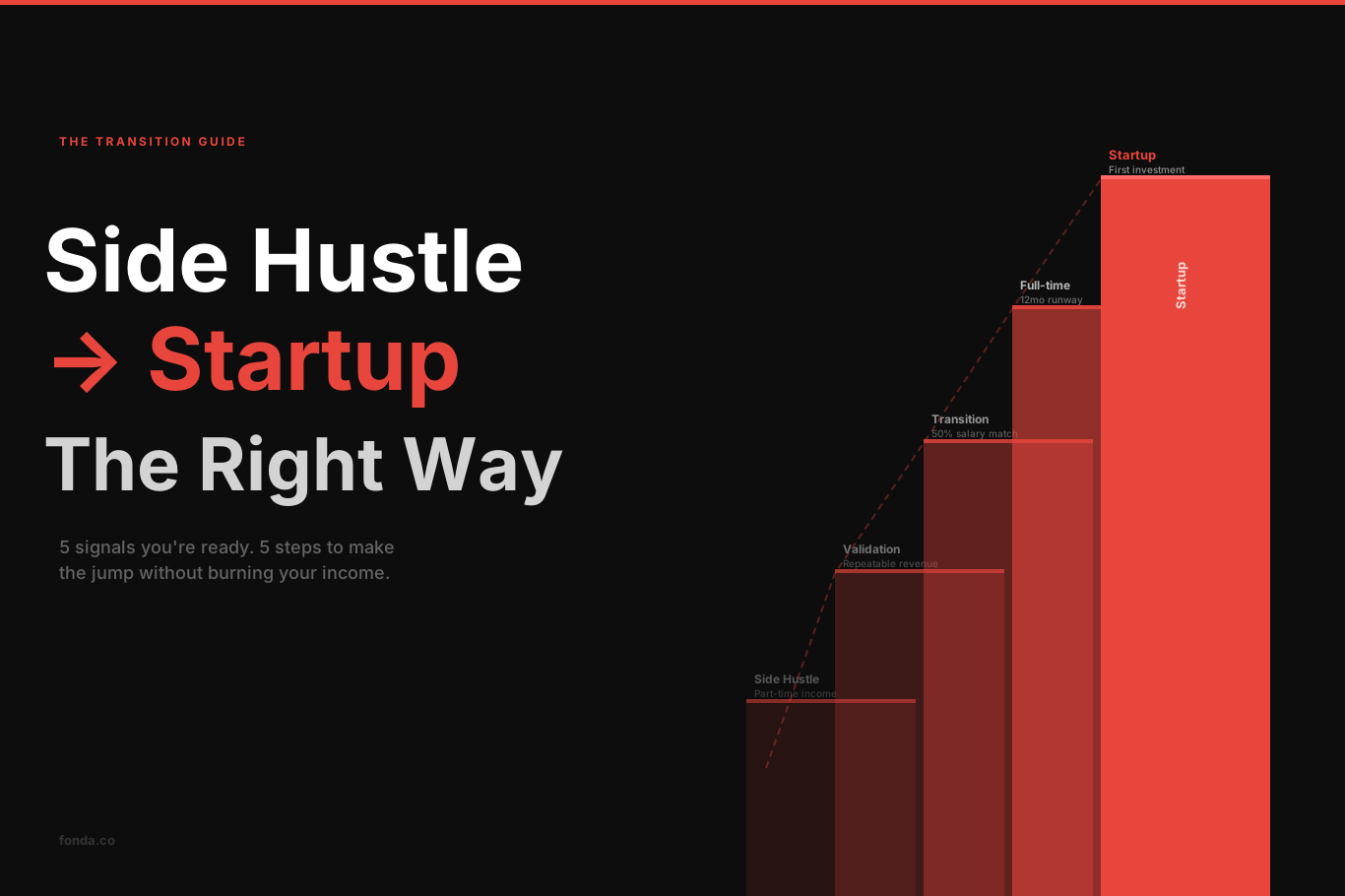
How to Turn a Side Hustle into a Startup (The Right Way)
A side hustle and a startup are different things. Here are the five signals that say you're ready to make the jump — and the steps to do it without burning your income.
Quick Answer
You're ready to turn your side hustle into a startup when:
- 1. Revenue is 50–60% of your salary for 3 consecutive months
- 2. Demand outstrips your part-time capacity
- 3. You have a repeatable customer acquisition channel
- 4. The business has compounding (not just linear) growth
- 5. You have 12 months of personal runway in the bank
Most side hustles never become startups. Not because the idea was bad — but because the founder quit too early, before the business had repeatable revenue or a scalable component. Or too late, after the idea had gone cold and the window had closed.
The transition is a moment that requires specific signals and specific steps. Here is how to read them correctly.
5 signals your side hustle is ready to become a startup
Revenue replaces a meaningful percentage of your salary
A useful threshold: when your side hustle generates 50–60% of your take-home pay consistently for three months, the financial case for full-time becomes real. Not one good month — three consecutive months of the same or growing revenue.
You are turning away work or struggling to deliver
When demand outstrips your part-time capacity, you are either leaving money on the table or delivering a degraded product. Both are signals that the business needs more than nights and weekends.
You have a repeatable customer acquisition channel
Not 'I got clients from referrals and LinkedIn.' Repeatable means you can spend £X on outreach and predict how many leads it generates. If your growth is not predictable, scaling won't be either.
The business has compounding, not just linear, growth
A service business where your time is the product grows linearly at best. A startup candidate has components that scale without your hours: productized offers, content, SEO, or a product that sells while you sleep.
You have runway
12 months of living expenses in the bank before you quit. Not 3 months. Not 6. 12. The second half of that runway is for when things go slower than expected — because they always do.
5 steps to make the transition safely
Productize before you quit
The transition from side hustle to startup is easier if the business doesn't depend entirely on your real-time effort. Before going full-time, build one productized offer: a fixed-scope service, a course, a template, or a SaaS feature that earns without hourly billing. This isn't optional — it's what makes the startup survivable without a salary.
Lean Canvas Generator
Map your productized business model before you go full-time.
Run the replace-the-salary math
Calculate exactly how much your side hustle needs to generate before you can leave safely. Include: your monthly personal expenses, 3 months of business runway, and a buffer for health insurance and taxes if you're in the US. The number is usually 1.5–2× your current take-home pay, not equal to it. Know this number before you hand in your notice.
Business Plan Generator
Build a financial model that includes your salary replacement threshold.
Validate the startup version before killing the day job
A side hustle validated at £2k/month of part-time revenue is not the same as a startup validated to grow to £20k/month. Before quitting, run one growth experiment: double your outreach, launch a new channel, test a price increase, or release the productized version to 10 beta customers. See if the business can grow before you bet your income on it.
Roast My Idea
Run the startup version of your idea through a feasibility check.
Register the business and clean up contracts
Check your employment contract for non-compete and non-solicitation clauses before going full-time. In many jurisdictions, these have limited enforceability — but you need to know your exposure. Separately, set up a proper legal entity (LLC, Ltd, etc.), open a business bank account, and start invoicing formally. This matters for taxes, investor conversations, and client trust.
Elevator Pitch Generator
Generate a pitch that positions you as a startup, not a freelancer.
Tell the best clients first
Your three or four best existing clients are the most likely to follow you full-time, upgrade their spend, or refer the next clients. Tell them before you go public. Frame it as growth — you're going full-time because demand made it make sense. This is also the moment to renegotiate rates if you've been underpricing.
SWOT Analysis Generator
Map client relationship risks and opportunities before the transition.
Built for this transition
Fonda runs the side hustle → startup playbook with you
Validation, productization, replace-the-salary math, and GTM strategy — all designed for founders who still have a day job.
Frequently asked questions
When should I quit my job to pursue my side hustle?+
When three things are true: your side hustle has generated at least 50–60% of your salary consistently for three months, you have 12 months of personal runway in the bank, and you have a repeatable customer acquisition channel. All three — not just one or two. Quitting early is the most common and most avoidable mistake in the side hustle to startup transition.
Is a side hustle the same as a startup?+
No. A side hustle is typically a service business where your time is the product — it doesn't scale without you, and the ceiling is your available hours. A startup has components that scale independently: a product, a content flywheel, a SaaS tool, or a community. The transition involves building those components before the income runs out.
How do I scale a service business without quitting my job?+
Productize one service: create a fixed-scope, fixed-price offering that you can deliver in a predictable number of hours. Then outsource or automate the parts that don't require your direct input. Use the revenue from the productized offer to fund the next hire or the first product. This creates the compounding the startup phase requires.
What should I do first — quit or validate?+
Validate first. Always. Run the growth experiments, test the productized offer, and confirm the customer acquisition channel works before you change your income situation. The best time to take risks is when you still have a salary as a backstop.
Related reading
How to Find Your First 10 Customers
Once you're full-time — here's how to grow the customer base
10 Startup Idea Validation Mistakes
Validate the startup version before quitting the day job
First-Time Founder Checklist
The phase-by-phase guide for the transition
Lean Canvas vs Business Model Canvas
Map the productized business model before going full-time