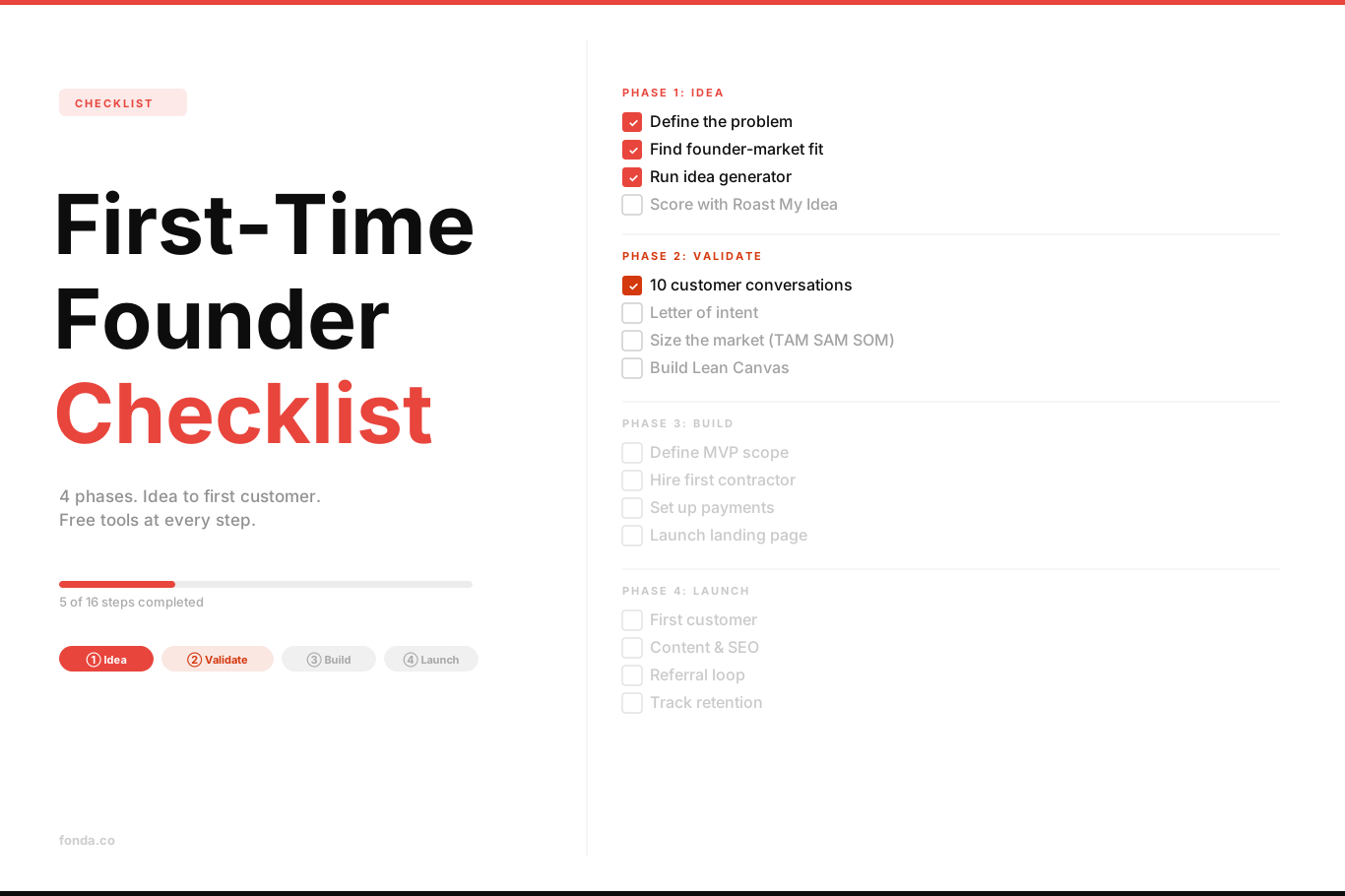
First-Time Founder Checklist: 4 Phases from Idea to Launch
A practical, phase-by-phase guide for first-time founders — with free tools at every step and clear go/no-go criteria so you know exactly when to move forward.
Quick Answer
The four phases every first-time founder must complete before spending serious money:
- 1. Idea — score 3+ ideas before committing to one
- 2. Validate — talk to 10 real people, get at least 5 pre-orders
- 3. Build — ship the core value in under 4 weeks
- 4. Launch — sell directly to 50 specific people before marketing broadly
The most common first-time founder mistake isn't a bad idea. It's skipping steps. Building before validating. Scaling before launching. Optimising before anyone is paying.
This checklist is designed to stop that. Work through it in order. Don't move to the next phase until you've completed the current one. The friction is the point.
Phase 01
Choose the right idea
Most first-time founders pick the first idea they fall in love with. The ones who succeed run at least three ideas through a basic filter before committing.
List every problem you've personally experienced in the last 12 months
Cross out any idea where you can't name five specific people who have the problem today
For each remaining idea: how do those people solve it right now, and what does that cost them?
Score each idea: problem urgency (1–5), your unfair advantage (1–5), market size rough guess (1–5)
Pick the idea with the highest combined score — not the one that excites you most
Idea Generator
Generate 10 validated startup ideas based on your skills and interests in 60 seconds.
How do I know if my startup idea is good?+
A good idea solves a specific problem for an identifiable group of people who currently spend money (time or cash) working around it. If you can name five people who have the problem and describe how they solve it today, the idea is worth validating.
Phase 02
Validate before you build
Validation is the step most first-time founders skip — and the reason most of them waste six months building something nobody wants.
Write a one-sentence hypothesis: '[Person] will pay [amount] for [solution] because [reason]'
Identify 20 people who fit the target customer description — use LinkedIn, Reddit, or your own network
Run 10 conversations using open-ended questions: 'Tell me about the last time you dealt with [problem]'
Build a landing page with a waitlist or pre-order button — measure conversion, not just visits
Set a go/no-go threshold before you start: e.g. '5 pre-orders in 30 days or I pivot'
Roast My Idea
Get a brutally honest assessment of your idea across 6 dimensions before you commit months to it.
What counts as validated?+
Validated means someone has given you real signal of demand: a pre-order, a signed letter of intent, or a deposit. Verbal interest ('sounds cool') is not validation. Real money or a signed commitment is.
Phase 03
Build the leanest version that proves the value
The job of version one is not to be the product you're proud of. It's to prove that your core value exchange works. Everything else is scope creep.
Write down the single thing your product does that makes someone's life meaningfully better
Draw the simplest version of that thing — one input, one output, no dashboard
Cut any feature that doesn't directly support the core value exchange
Set a hard deadline: MVP live in 4 weeks or cut scope further
Give early access to the 10 people from your validation interviews first — they already believe in the problem
Lean Canvas Generator
Map your entire business model on one page before you write a line of code.
How do I decide what to build first?+
Ask: what is the single thing a user needs to experience to understand the value? Build only that. A business plan tool only needs one input and one output for version one. Everything else — dashboards, collaboration, export formats — comes after you prove the core works.
Phase 04
Launch to real people and get paid
Launching is not posting on Product Hunt and waiting. It's a deliberate act of putting your product in front of the specific people most likely to buy it and asking for money.
Write a launch list: the 50 people most likely to be your first customers (name and contact for each)
Send a direct, personal message to each person — not a newsletter blast
Offer a launch discount that expires in 72 hours to create urgency without feeling fake
Set up a dead-simple payment link (Stripe, Gumroad, or Lemon Squeezy) before you launch
After 10 paying customers: ask each one why they bought, what they'd cut, what they'd pay more for
Elevator Pitch Generator
Generate 10, 30, and 60-second pitches for your launch messages and first sales conversations.
When should I launch?+
When you have something that delivers the core value — not when it's polished. The discomfort of launching something imperfect is the signal you're doing it right. Waiting for 'ready' is how products never ship.
Ready to start?
Fonda runs this checklist with you — end to end.
Your personal co-founder guides you through all four phases, does the research, drafts the documents, and tells you exactly when you're ready to move forward.
Related reading
10 Startup Idea Validation Mistakes
The errors that make phase 2 produce false confidence
How to Find Your First 10 Customers
Phase 4 in detail — the channels that actually work
How to Write a Business Plan for a Startup
Document the business before you scale
Why Startup Ideas Fail Before They Launch
The 7 failure patterns this checklist prevents