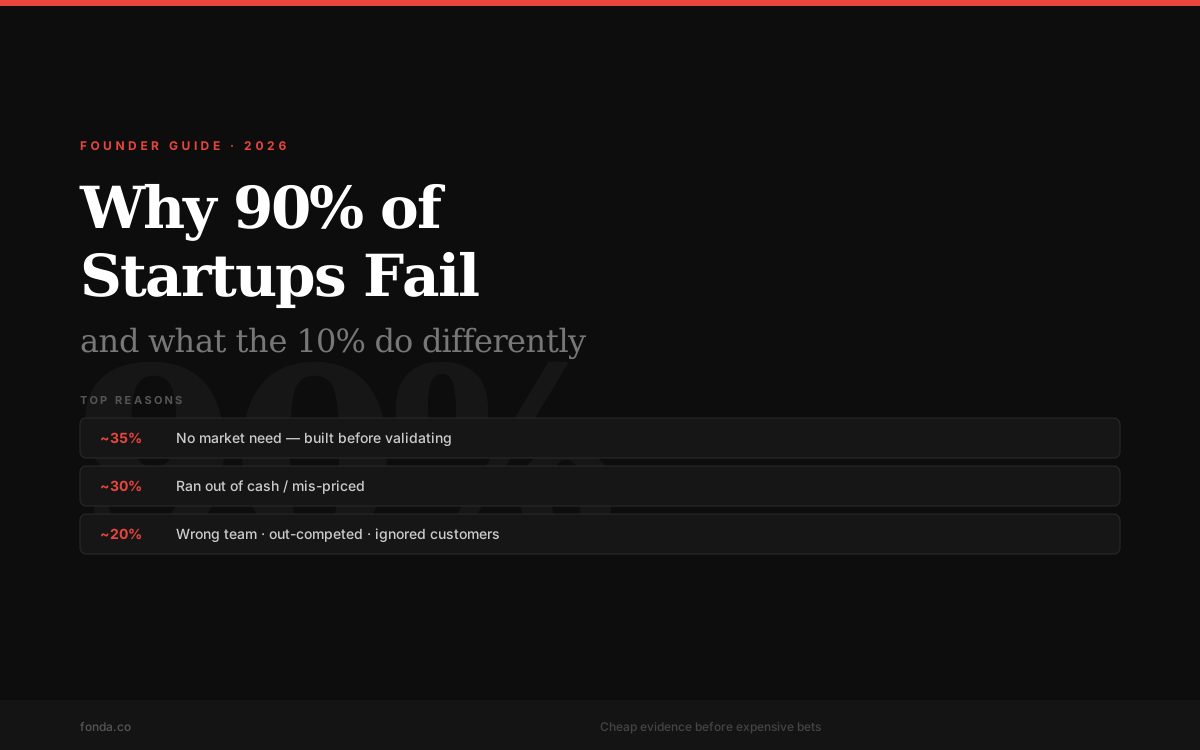
Why 90% of Startups Fail — And What the 10% Do Differently
Most startups don't die from bad luck or a bad market. They die from a short list of avoidable mistakes. Here they are, ranked — and the habits the survivors share.
The short version
The number-one reason startups fail is building something people don't need, followed by running out of cash and the wrong team. The 10% that survive share five habits — and all of them come down to one thing: getting cheap evidence before making expensive bets.
"90% of startups fail" gets repeated so often it's become background noise. But the number isn't the interesting part — the pattern is. Failures aren't random. When you read enough founder post-mortems, the same handful of causes show up again and again. And because they repeat, they're avoidable.
Here's the honest ranking of why startups fail, roughly in order of how often each shows up (causes overlap, so the numbers add past 100%) — and, for each, what the survivors do instead.
Why startups fail, ranked
No market need
The single biggest killer. A great product for a problem few people urgently have. Usually the result of building before validating.
What survivors do: Validate demand with real customer actions before you build. Talk to 15 people who have the problem.
Ran out of cash / mis-priced
Not always about raising more — often about burning too fast or charging too little for too long.
What survivors do: Know your runway to the week. Charge earlier than feels comfortable; revenue is the cheapest funding.
Wrong team
Missing a key skill, co-founder conflict, or nobody who can sell. Solvable, but fatal if ignored.
What survivors do: Be honest about the gap. A co-founder, a first hire, or a hard-won new skill — fill it before it compounds.
Out-competed / no moat
A bigger player shipped it, or ten identical tools appeared and there was no reason to pick yours.
What survivors do: Win a specific wedge first — a narrow customer you serve better than anyone bothers to.
Pricing / business model
The unit economics never worked, or the model didn't match how customers wanted to buy.
What survivors do: Model the numbers early. If a customer isn't clearly worth more than they cost to get, the model is the product.
Ignored customers
Fell in love with the product and stopped listening to the people using it.
What survivors do: Make talking to customers a weekly habit, not a launch-week event.
Percentages are directional, drawn from widely-cited startup post-mortem analyses; causes overlap, so they sum past 100%. The ranking matters more than any single figure.
What the 10% do differently
Survivors aren't smarter or luckier. They're more disciplined about learning cheaply. Five habits show up over and over:
They validated before they built
The survivors treat their first idea as a hypothesis, not a plan. They get real evidence — pull, pre-orders, people asking when it's ready — before investing anything they'd hate to lose.
They shipped small and learned fast
Instead of a perfect launch, they run many cheap experiments. Each one is designed to be wrong quickly, so the cost of being wrong stays tiny.
They watched the money like a hawk
They know their runway, charge early, and treat revenue as validation. Cash discipline buys the time to figure the rest out.
They stayed close to customers
Not surveys — conversations. The 10% keep a direct line to the people they serve and let that steer the roadmap, not their own assumptions.
They picked a wedge and owned it
They didn't try to serve everyone. They dominated a narrow, specific group first, then expanded from a position of strength.
The thread that ties it together
Every failure above is an expensive bet made without cheap evidence. Every survival habit is a way to get that evidence first. That's the whole game: validate before you plan, plan before you build, and stay close to the people paying you. Do that, and you don't need to beat the 90% — you just have to stop making their mistakes.
Want the practical version? Start with how to validate a startup idea, avoid the classic traps in 10 validation mistakes, or get a free, blunt roast of your idea.
Be in the 10%
Fonda runs the disciplined path with you — validate before you build, size the market, and get an honest verdict before you bet a year on it. Start free.
Stress-test my idea free →Frequently asked questions
What percentage of startups actually fail?
The often-quoted figure is that around 90% of startups fail over the long run, with a large share failing in the first few years. The exact number varies by how you define 'startup' and 'failure', but the direction is clear: most don't make it. The useful takeaway isn't the statistic — it's that the failures cluster around a few avoidable causes, which means you can materially improve your odds.
What is the number one reason startups fail?
Building something people don't need. In post-mortems of failed startups, 'no market need' is consistently the most common cause. It usually traces back to building before validating — falling in love with a solution and never confirming that enough people have the problem badly enough to pay. It's also the most preventable cause, which is the good news.
Can you predict if a startup will fail?
You can't predict it, but you can read the early signals. Weak or no demand in cheap tests, a business model where a customer costs more than they're worth, a critical skill gap nobody's addressing, and founders who avoid talking to customers are all flashing lights. None are fatal on their own, but ignored, they compound. The survivors treat these as things to fix now, not later.
How do I avoid these mistakes?
Front-load the cheap learning. Validate demand before you build, model your unit economics early, keep a weekly line to customers, and know your runway to the week. A structured approach helps — a guided journey that forces the right question at each stage (validate before you plan, plan before you build) is exactly how the disciplined 10% avoid the traps the other 90% fall into.